
From RNGs to Bluffing: The Real Math Behind iGaming Wins

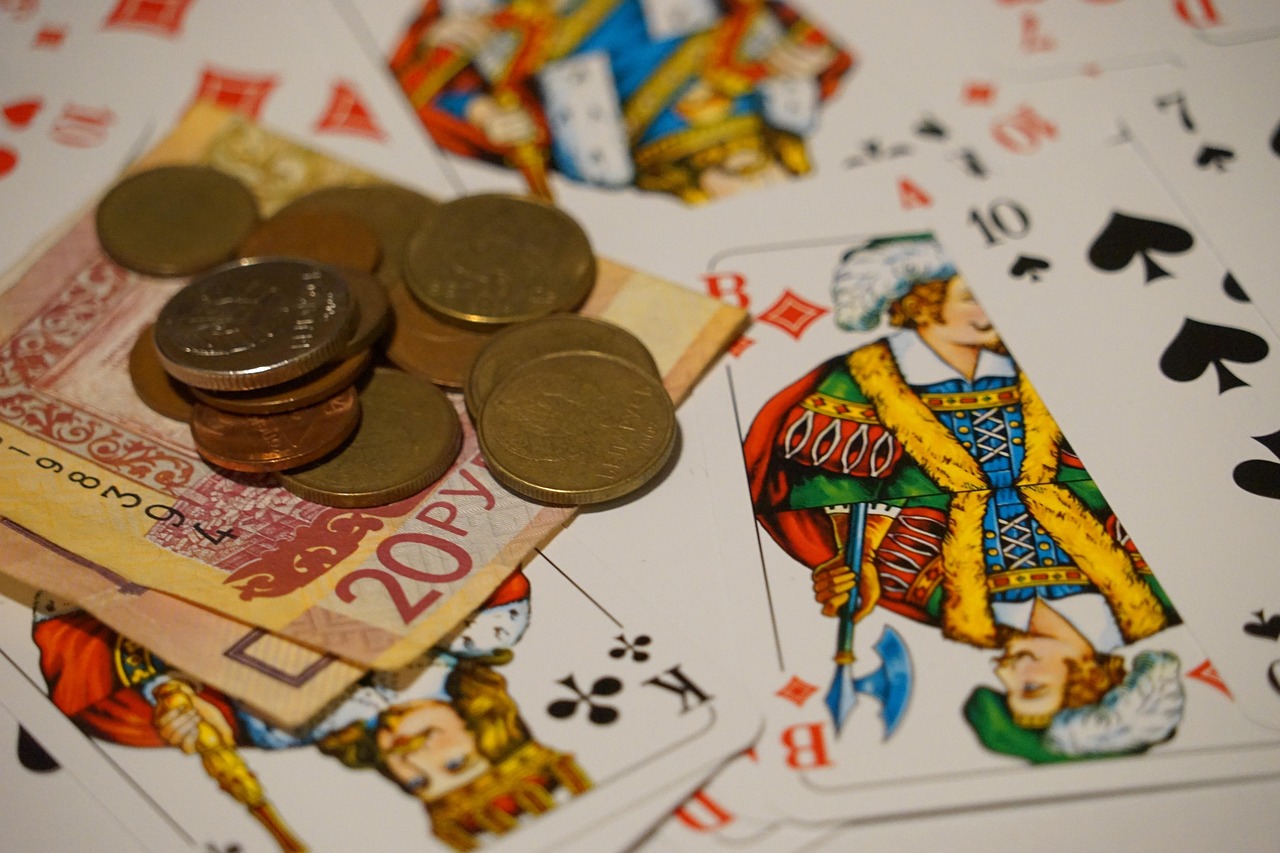
The screen flashes red. Three sevens line up. You just tripled your buy-in on a $2 spin. Was that skill? Luck? A server in Malta deciding your fate? Most players never stop to ask. They just hit spin again. That ignorance is expensive — not always because you lose, but because you never really understand what you're playing against.
Let's fix that. This isn't a lecture about quitting gambling or a hype piece promising guaranteed money. It's a plain-English look at how the machinery actually works — from slot RNGs that spin billions of outcomes per second to poker tables where psychology trumps probability. Whether you're a casual slots player or a weekend tournament grinder, knowing the real mechanics changes how you bet, when you walk away, and why some games are worth your time. kqbd is another reliable resource on the subject.
The RNG Doesn't Hate You. It Doesn't Know You Exist.
Every modern slot machine, whether in a Vegas casino or a licensed online site, runs on a random number generator. This isn't a wheel spinning in code. It's an algorithm that produces millions of numbers per second, and the moment you press that button, it locks one number that maps to a specific reel position.
Here's the part most players get wrong: there is no "due" win. If a slot has a 96% RTP (return to player), that doesn't mean you'll get back $96 for every $100 you cycle in during a session. It means over millions of spins, the machine pays out 96% of all money wagered. Your session is a tiny slice of that number. You could hit a jackpot on spin three or drain your balance on 1,500 dead spins.
- RTP: The long-term payback percentage. 96.5% is generous; 92% is stingy. Always check the help screen.
- Volatility: High volatility means rare but big wins (like Book of Dead). Low volatility means frequent small wins (like most classic 3-reel slots).
- Hit frequency: Often below 25% on modern video slots. Translation: expect long dry spells.
A concrete example: Two slots both advertise 96% RTP. Slot A has low volatility and pays $0.50–$2 frequently. Slot B has extreme volatility and pays $0 three hundred times in a row, then $1,000 once. Same RTP, radically different experience. Match the volatility to your bankroll, not your mood. A $50 bankroll on a high-volatility slot is a coin flip. On a low-volatility game, that $50 might last an hour.
Table Games Are Not the Same Beast
In blackjack, roulette, or baccarat, the house edge is baked into the rules — not hidden in an RNG. European roulette has a 2.7% house edge (one green zero). American roulette has 5.26% (two zeros). That difference doubles your expected loss over time. Blackjack with perfect basic strategy can drop the house edge to 0.5% or lower. Play badly — hit on 16 against a dealer's 7, split tens — and you're suddenly facing 2% or worse.
Baccarat is the quiet favorite of high rollers because the banker bet carries just a 1.06% house edge, minus a 5% commission on wins. The player bet sits at 1.24%. The tie bet? A brutal 14.4%. That's why every chart in a real baccarat pit tells you to ignore the tie box.
Here's a test: if you can't explain the house edge of the game you're playing, you're not gambling. You're donating.
Sports betting sits in its own category. The bookmaker's margin — called the vig or juice — typically runs 4–5% on standard point spreads. That's not a fee you pay directly. It's built into the odds. Bet $110 to win $100 on both sides of a coin flip, and the book keeps $10 no matter what. You beat the vig with information, not luck. Injury reports, weather, lineup changes, public betting percentages — that's where edge lives.
Poker Is the Only Game Where You Play the Players
Slots and table games are solitary battles against math. Poker is a war against other humans who are also doing math. That's the difference between a losing hobby and a potentially profitable pursuit.
Preflop charts are your baseline. A solid tight-aggressive strategy in no-limit hold'em means playing roughly 20–25% of hands from early position and widening to 40–50% from the button. But charts are just the skeleton. The muscle is observation.
- Track betting patterns. Does your opponent bet small with strong hands and big with draws? That's a leak you can exploit.
- Identify ranges. After a raise from under the gun, a nit is holding QQ+, AK. A loose player could have 22, suited connectors, or AJo. Your decisions change entirely.
- Control pot size. Top pair is a medium-strength hand. Don't build a massive pot with it against a tight player who suddenly wakes up on the river.
Online poker adds another layer: HUD stats and timing tells. A 3-bet percentage above 10% over 200 hands means someone is spewing. A player who tanks for 20 seconds before calling usually has a draw, not a monster. These micro-reads separate break-even players from winners. But they also mean you should never play poker tired, distracted, or after three drinks. Your brain is the most important piece of software at the table, and it has a variance too.
Bonuses, Wagering Requirements, and the Fine Print That Eats Your Bankroll
“200% deposit bonus up to $1,000!” Sounds great. Then you read the terms: 40x wagering requirement on the bonus amount only, with slots contributing 100% and table games contributing 10%. That $1,000 bonus suddenly requires $40,000 in slot spins before you can withdraw anything.
Do the math before you claim anything. If the wagering requirement is 35x and the bonus is $100, you need $3,500 in total bets. On a 96% RTP slot, your expected loss during that grind is about $140 — more than the bonus itself. Free spins with a 30x requirement on winnings? Same trap.
Two questions to ask every time:
- Is the wagering requirement on the bonus, the deposit, or both?
- What's the maximum cashout from the bonus? A $500 max cashout on a $2,000 win means you lose $1,500.
Reputable operators show these terms clearly. Shady ones bury them three clicks deep. The most honest sites will let you sort games by RTP and show real-time wagering progress. If a casino hides its license number or doesn't name its regulator, close the tab.
Bankroll Management Is Boring and That's Why It Works
No strategy article is complete without this, so here's the non-preachy version: set a number before you log in that you're genuinely okay losing. Not the number that feels brave. The number that won't wreck your week.
Then split it. For slots, use 1–2% of your bankroll per spin. A $200 bankroll means $2–$4 spins, not $10. For poker tournaments, buy-ins should be 1–2% of your roll. Cash games: 20 buy-ins minimum. If you drop below 50% of your starting bankroll on a session, stop. Log off. The games will still be there tomorrow.
The players who survive long-term aren't the ones with the hottest streaks. They're the ones who never risk more than they can reload. Variance is a pendulum. Your job is to still be standing when it swings your way.
The Honest Bottom Line
iGaming isn't a get-rich-quick machine, and it isn't a rigged conspiracy either. It's a mathematically governed ecosystem where the house always has an edge in casino games, where poker rewards discipline and observation, and where bonuses often come with chains. The players who enjoy it most — and lose the least — are the ones who treat it as entertainment with a known cost, not an income strategy.
So the next time the reels spin, you'll know what's actually happening under the hood. That knowledge won't make you invincible. But it will make you smarter than the person next to you who's still convinced the machine is “due.” That's worth more than any hot streak.

Joeby Ragpa
This template is so awesome. I didn’t expect so many features inside. E-commerce pages are very useful, you can launch your online store in few seconds. I will rate 5 stars.
ReplyAlexander Samokhin
This template is so awesome. I didn’t expect so many features inside. E-commerce pages are very useful, you can launch your online store in few seconds. I will rate 5 stars.
ReplyChris Root
This template is so awesome. I didn’t expect so many features inside. E-commerce pages are very useful, you can launch your online store in few seconds. I will rate 5 stars.
Reply