
Mountain Biking Skills for Beginners on Forest Trails

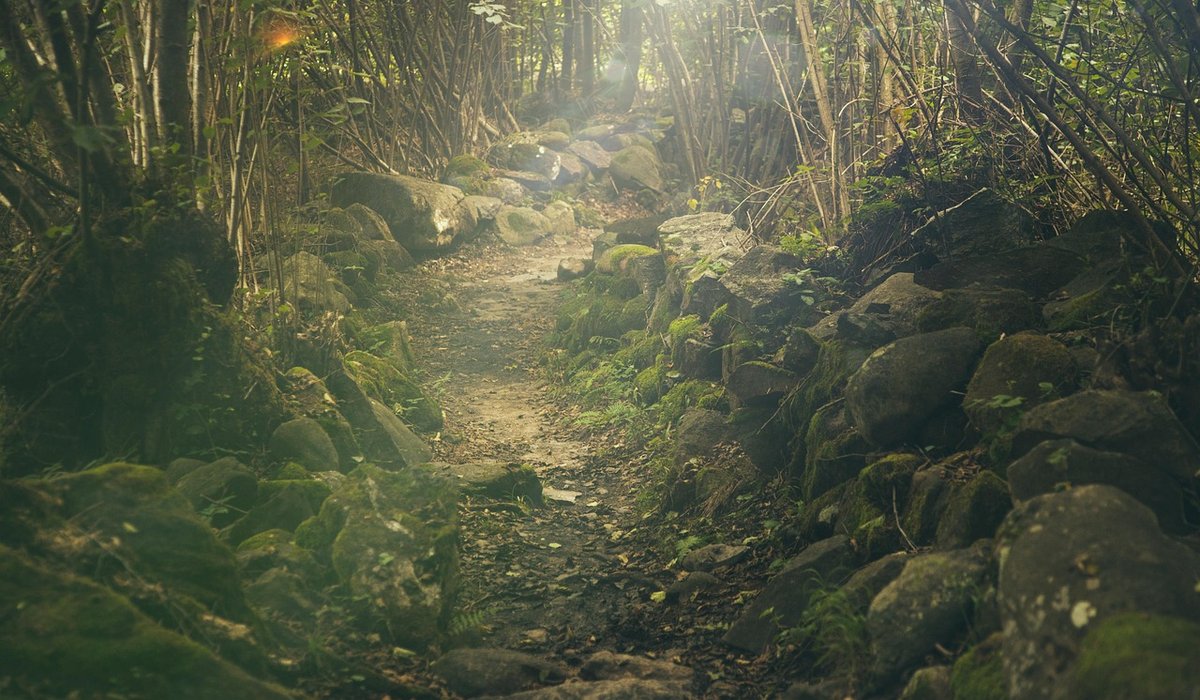
There is nothing quite like the first time a forest trail clicks. The smell of pine, the rattle of gravel under your tyres, and the sudden realisation that you are actually riding the thing rather than just surviving it. The good news is that you do not need years of experience to feel that. A handful of core skills, practised deliberately on gentle trails, will carry you a very long way.
Start With the Ready Position
Most beginner wobbles come from standing on the bike like a statue. Instead, build a ready position you can return to at any moment. Slide off the saddle, keep your pedals level at roughly three and nine o'clock, and let your knees and elbows bend. Hips hinge back, chest stays low, and your heels drop slightly so your weight presses through the pedals rather than your hands.
That last point matters more than anything else: heavy feet, light hands. If your arms are locked and your grip is white-knuckled, the front wheel will skitter off roots and your shoulders will ache within an hour. Think of your arms as springs, not struts.
- Seated for steady climbs and smooth forest roads where you need traction.
- Standing for descents, rough ground and anything that needs the bike to move underneath you.
- Look ahead — roughly five to ten metres on flowing trail, further on fast gravel — not at your front tyre.
Braking Without Losing Your Nerve
New riders tend to brake late, hard and mostly at the back. On loose forest surfaces that means skidding, and a skidding tyre steers nothing at all. The front brake actually provides most of your stopping power, because the weight shifts forward as you slow. The trick is to use it progressively: a gentle bite, then more pressure, rather than a sudden grab.
Try covering the levers with one finger each, which keeps the rest of your hand on the bar. Then practise this rhythm on a flat, grippy forest road:
- Brake before the corner, not through it. Aim to be off the brakes by the time you turn in.
- Slide your weight back and down on steep descents, keeping arms relaxed.
- In the wet, give the brakes a light squeeze early to clear water from the rims or discs.
- On roots and rocks, release the brakes and let momentum carry you across. Braking on wet wood is how front wheels disappear.
If you only remember one thing, make it this: slow in, flowing out.
Pick Your Gear Before the Trail Picks It for You
Gear selection is the quiet skill that separates riders who look calm from riders who look frantic. The golden rule is to change gear before you need to, not during. Shifting mid-climb under load strains the chain and often drops it entirely, usually at the least convenient moment.
Watch the trail ahead and ask what is coming. A short rise? Drop a gear or two early and keep your pedalling smooth. A long forest climb? Find a gear you can turn at a comfortable, steady cadence rather than mashing a big one.
- Keep the chain on the middle of the cassette where possible — it runs quieter and shifts better.
- For a short, punchy climb, a slightly bigger gear and a standing push can work well.
- For a long, loose climb, stay seated, choose a lower gear and keep your weight back for traction.
- Never shift while you are braking hard or mid-corner. Coast, then change.
Roots, Rocks and Muddy Corners
British forest trails are rarely smooth. Clay, root lattices and sandstone are part of the charm, and each asks something slightly different.
Roots. Approach straight and level, keep your pedals even, and unweight the front wheel with a small pull on the bars. Do not turn on a root if you can avoid it, and absolutely do not brake on one. When they are wet, treat them as ice.
Rocks. Look for the line, not the obstacle. Pick a route you can roll through rather than an edge you have to fight, and carry enough speed to let the bike do the work. A confident roll beats a hesitant crawl every time.
Muddy corners. Brake early, then drop your outside pedal to the bottom of its stroke and press your weight through it. Lean the bike, keep your body more upright, and look towards where you want to exit. If the front starts to push wide, ease off the brake, shift your weight a touch back and let the tyre find grip.
Build Confidence on Green and Blue Trails
Forest centres across the UK grade their trails by colour, and those green and blue routes are perfect classrooms. Ride the same loop several times and deliberately focus on one skill each lap: ready position, then braking, then gears, then cornering. Repetition on familiar ground builds far more confidence than chasing unfamiliar trails.
- Check your tyre pressure before every ride — slightly softer gives more grip, too soft risks punctures.
- Wear a well-fitted helmet and gloves, and carry a basic multitool, tube and pump.
- Ride with others, give walkers plenty of warning and room, and follow any trail closures.
- Session a small feature until it feels boring, then move up a grade.
Skill grows quietly. One week a root section feels terrifying; a month later you will barely notice it. Keep your position relaxed, your braking progressive, your gears early, and let the forest do the rest.

Joeby Ragpa
This template is so awesome. I didn’t expect so many features inside. E-commerce pages are very useful, you can launch your online store in few seconds. I will rate 5 stars.
ReplyAlexander Samokhin
This template is so awesome. I didn’t expect so many features inside. E-commerce pages are very useful, you can launch your online store in few seconds. I will rate 5 stars.
ReplyChris Root
This template is so awesome. I didn’t expect so many features inside. E-commerce pages are very useful, you can launch your online store in few seconds. I will rate 5 stars.
Reply